
Want More Cherries? Borrow These Best Practices from a Fourth-Generation Cherry Grower
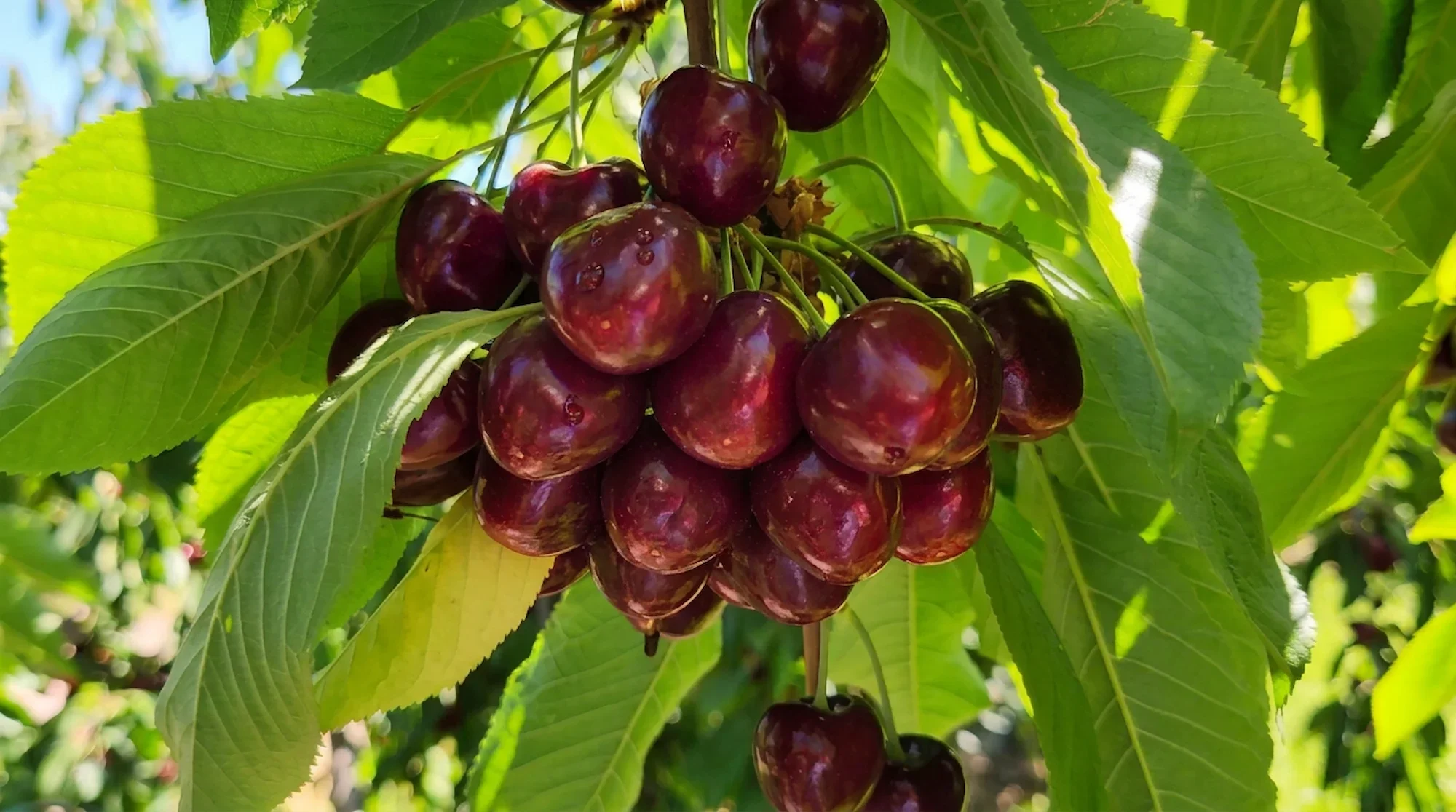
Cherry harvest in Washington State's Yakima Valley.
We recently spoke with Craig Harris, a fourth-generation cherry grower in Washington's Yakima Valley, during cherry harvest. We asked him what he knows now that he wishes he'd known when he first started growing cherries. Many of the lessons he shared are applicable to home fruit growers.
The Importance of Rootstock
Most cherry trees sold by nurseries are made from two different trees joined together through grafting. The upper portion, called the scion, determines the variety of cherries the tree produces. The lower portion, known as the rootstock, influences how large the tree grows, how soon it begins producing fruit, and how well it performs under different growing conditions.
If your cherry tree is already established, rootstock is only one piece of the puzzle. Pollination, irrigation, nutrition, pruning, and overall tree health often have a greater influence on the quality and quantity of your harvest.
The next time you buy a cherry tree, rootstock is worth asking about. There isn't one rootstock that's right for every situation. The best choice depends on the variety, your soil, and your growing conditions.
If the nursery doesn't list the rootstock, consider asking:
What rootstock is this tree grafted onto?
Is it a good choice for my soil?
How large will the tree eventually become?
Those three questions can help you choose a tree that's a better fit for your yard.
Pollination
We also asked Craig what he would tell a friend whose cherry trees weren't producing.
"The first thing I'd check," he said, "is whether the tree has two compatible cross-pollinizers."
Cherry pollination depends on two things: bloom timing and genetic compatibility. Two different varieties may bloom at the same time and still not pollinate one another because they belong to the same genetic compatibility group, known as S-alleles. A quick online search will usually tell you whether your varieties are compatible, and we've included a compatibility chart at the end of this article as a quick reference. We'll cover S-alleles in more detail in a future article.
Craig also mentioned supplemental pollen. Many commercial growers include supplemental pollen as part of their pollination program to supplement the pollen naturally carried by bees and other pollinators. Home fruit growers can purchase the same supplemental pollen for use on their own trees. While it doesn't replace a compatible pollinizer, it can provide an additional source of compatible pollen when weather or low bee activity, or lack of a pollinizer tree limit pollen transfer. You can learn more about our supplemental pollination kits here.
Water & Tree Health
Once pollination has been addressed, Craig's next recommendation is to look at the overall health of the tree.
In his orchards, if a tree is struggling or looking "weepy," one of the first things he checks is irrigation. A clogged sprinkler, plugged emitter, or broken irrigation line can leave a tree short of water while the surrounding trees appear perfectly healthy.
One of the simplest ways to see whether your tree is getting enough water is to check the soil. After a deep watering, dig a small hole near the outer edge of the canopy and see how deeply the moisture has penetrated. Ideally, the soil should be moist 6 to 8 inches deep or more, not just damp at the surface. In hot, dry weather, established cherry trees usually benefit more from a slow, deep soak than frequent light watering. If the soil is dry just a few inches below the surface soon after irrigation, the tree may not be receiving enough usable water.
Compare soil moisture around each tree rather than assuming every tree is receiving the same amount of water. Look for blocked emitters, tilted sprinklers, broken risers, roots crowding irrigation lines, or mulch piled in a way that sheds water away from the root zone. A tree that looks "weepy," as Craig put it, may be telling the truth before any lab report is involved.
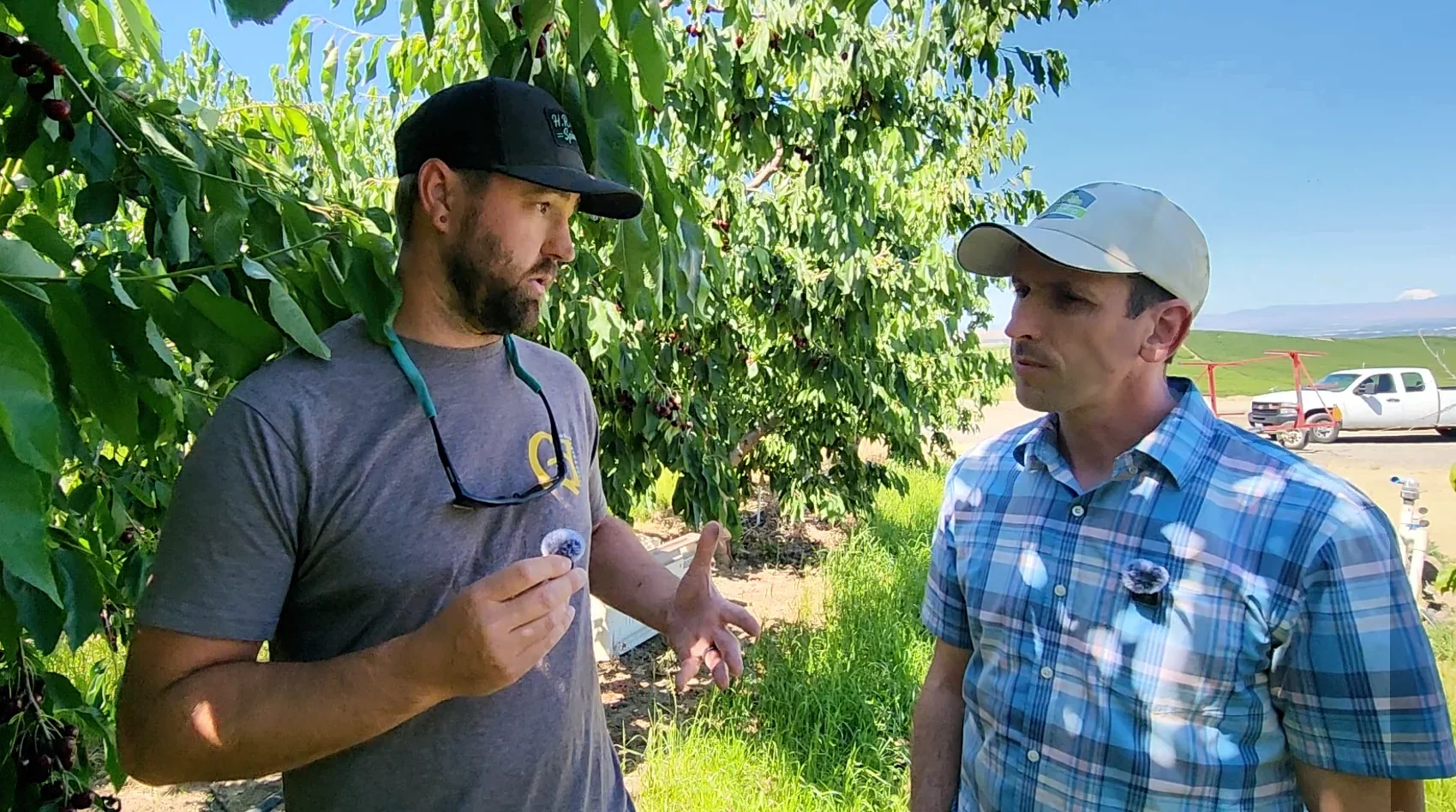
Craig Harris sharing lessons from four generations of growing cherries.
Fertility, Soil & Leaf Tissue Analysis
Just as important as water is making sure your tree has the nutrients it needs. Craig pointed out that as soon as one year's crop is harvested, the tree begins preparing for the next. Keeping a tree healthy through the rest of the growing season helps it build the nutrient reserves needed for next year's buds and fruit.
When it comes to understanding a tree's nutritional needs, Craig recommends using both soil and leaf tissue analysis because the two tests answer different questions.
A soil test measures what is present in the soil. A leaf tissue analysis measures what has actually made it into the tree. Those results don't always match. A nutrient may be present in the soil but unavailable to the tree, or the soil may simply not contain enough of that nutrient to begin with.
For home growers, a soil test is a good place to begin. If the tree continues to struggle after correcting any problems the soil test identifies, a leaf tissue analysis can help determine whether nutrients are actually reaching the tree. Used together, they help answer one of the most important questions: Is the problem in the soil, or is something preventing the tree from using what's already there?
We've included links to a few laboratories that offer both soil and leaf tissue analysis at the end of this article.
You Only Get One Shot Each Year
Near the end of our conversation, Craig reflected on one of the realities of growing cherries. There's a science behind it, and there's always something to improve. But there's also an element you can't control. Weather, timing, and other conditions all play a role.
One way to learn from each season is to keep a simple notebook. Recording bloom dates, weather conditions, and the changes you make from year to year can make it easier to recognize what helped—and what didn't—when the next growing season comes around.
As Craig put it, you only get one shot each year. The best you can do is learn from one season, make a few thoughtful adjustments, and give yourself the best chance for a better crop the next.
"You try again next year, make a little tweak, and hope you improve the quality, improve the size, or get a heavier crop load."
Additional Resources
Cherry S-Allele Compatibility Chart
Determine whether two sweet cherry varieties are genetically compatible for cross-pollination.
Download Cherry Compatibility Chart (PDF)
Recommended Mail-In Labs
Here are two highly reputable national labs that accept mail-in samples from anywhere in the country and perform both soil testing and leaf tissue analysis:
Waypoint Analytical: One of the largest agricultural labs in the country.
Logan Labs: Widely used by growers for highly precise, deep-dive breakdowns of soil chemistry and micronutrients.
Local Option: These are just two national examples, but you can also look up your local county + Cooperative Extension office. Most state university extension agencies run their own affordable agricultural labs right in your area.
Cherry Growing Interview with Craig Harris
Watch our conversation with fourth-generation cherry grower Craig Harris as he shares his perspective on growing cherries in Washington's Yakima Valley.
Coming soon to our YouTube channel.