
Why Did My Apple Tree Bloom But Not Produce Fruit?
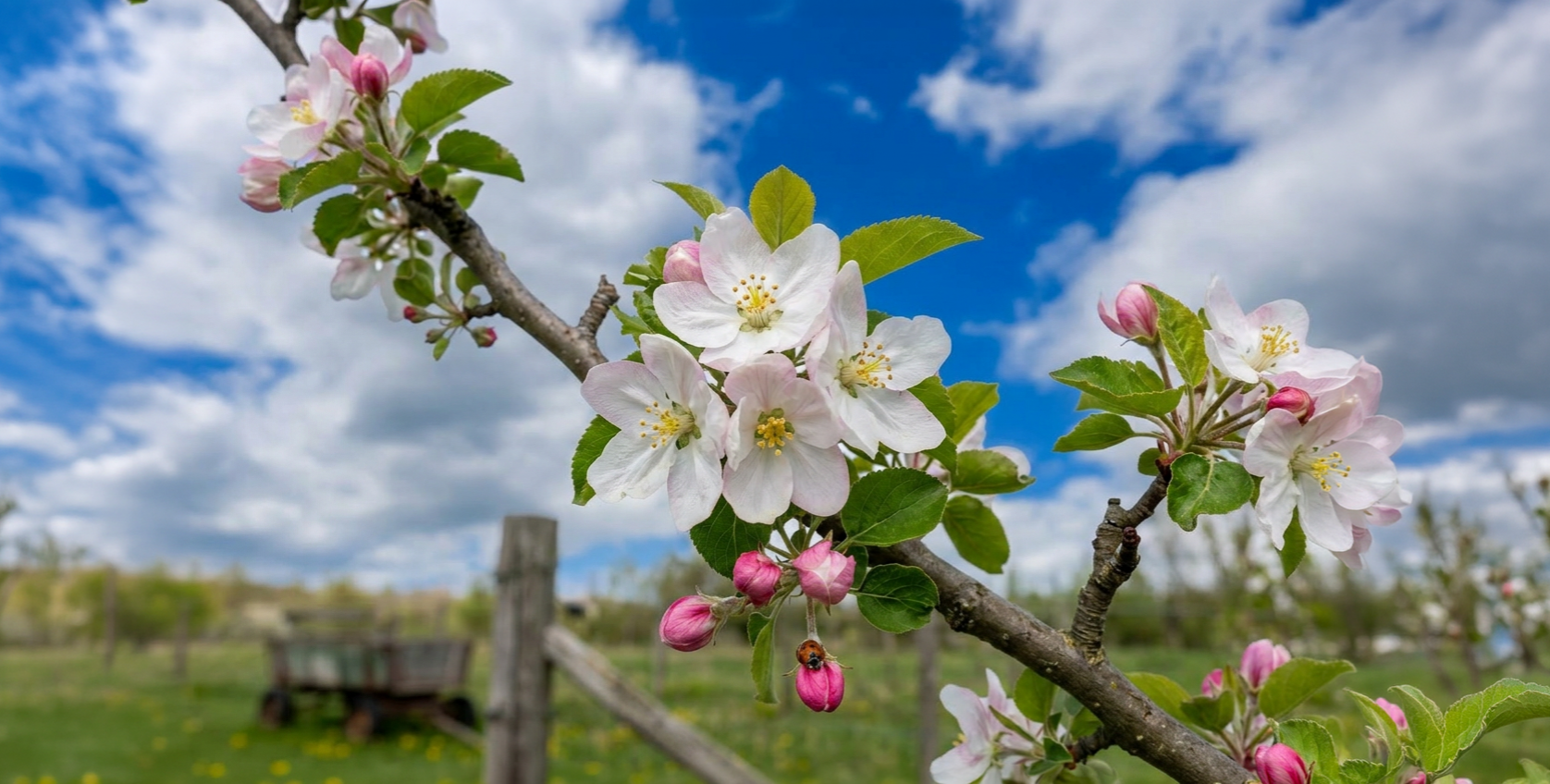
It is incredibly frustrating to watch your apple tree put on a heavy blanket of blossoms, only to find very few developing fruitlets—or none at all—several weeks later.
A heavy bloom is usually a good sign. It means your tree had enough energy to flower. But producing fruit requires more than blossoms alone.
The right pollen has to reach the right flowers at the right time, and even small problems with pollinizers, bloom timing, or spring weather can prevent fruit from forming.
Here are three common reasons apple trees bloom but fail to set fruit.
1. Lack of Pollinizers
Most apple trees need pollen from a different compatible apple variety to set a reliable crop. Without a compatible partner tree nearby, the blossoms may not develop into fruit.
But home growers can run into a less obvious issue: triploid apple varieties.
Some common apple varieties, including Jonagold, Gravenstein, and Winesap, are considered triploids. Because they carry three sets of chromosomes instead of the standard two, triploid varieties produce sterile or non-viable pollen and cannot be used as pollinizers for other apple trees.
This can create an unexpected pollination problem.
A Jonagold tree can receive pollen from a compatible variety and set a heavy crop of its own, but it cannot give viable pollen back to a neighboring tree. If a home orchard contains only two apple varieties, and one of them is a triploid, the second tree may be left without a functioning pollinizer. In practical terms, with a triploid, you usually need at least two other compatible apple varieties nearby.
2. Bloom Timing Mismatch
Even with fertile, compatible partners, timing still matters.
Individual apple flowers are typically only receptive for roughly two to five days. If trees bloom at different times, pollination may not occur, resulting in little to no fruit.
Apple varieties are broadly classified into bloom periods, such as early, mid, or late-season bloomers. If an early-blooming variety and a late-season bloomer miss each other’s window by a week, fruit set may be poor or fail completely.
Weather makes this timing a moving target from year to year. An unusually warm spring can cause a fast bloom, compressing the entire flowering period into just a few short days, while a sudden cold snap can stretch the timeline out and cause one variety to fall out of sync with another.
This is why bloom timing is just as important as variety compatibility. We will be publishing a bloom timing chart and apple compatibility guide in a future article to help home growers make better planting decisions.
3. Poor Spring Conditions
You can have compatible varieties blooming side by side, but if the weather does not cooperate, natural pollination often fails.
Cool, wet, windy, or unusually hot weather can all interfere with fruit set in different ways.
Rain, Wind, or Cold
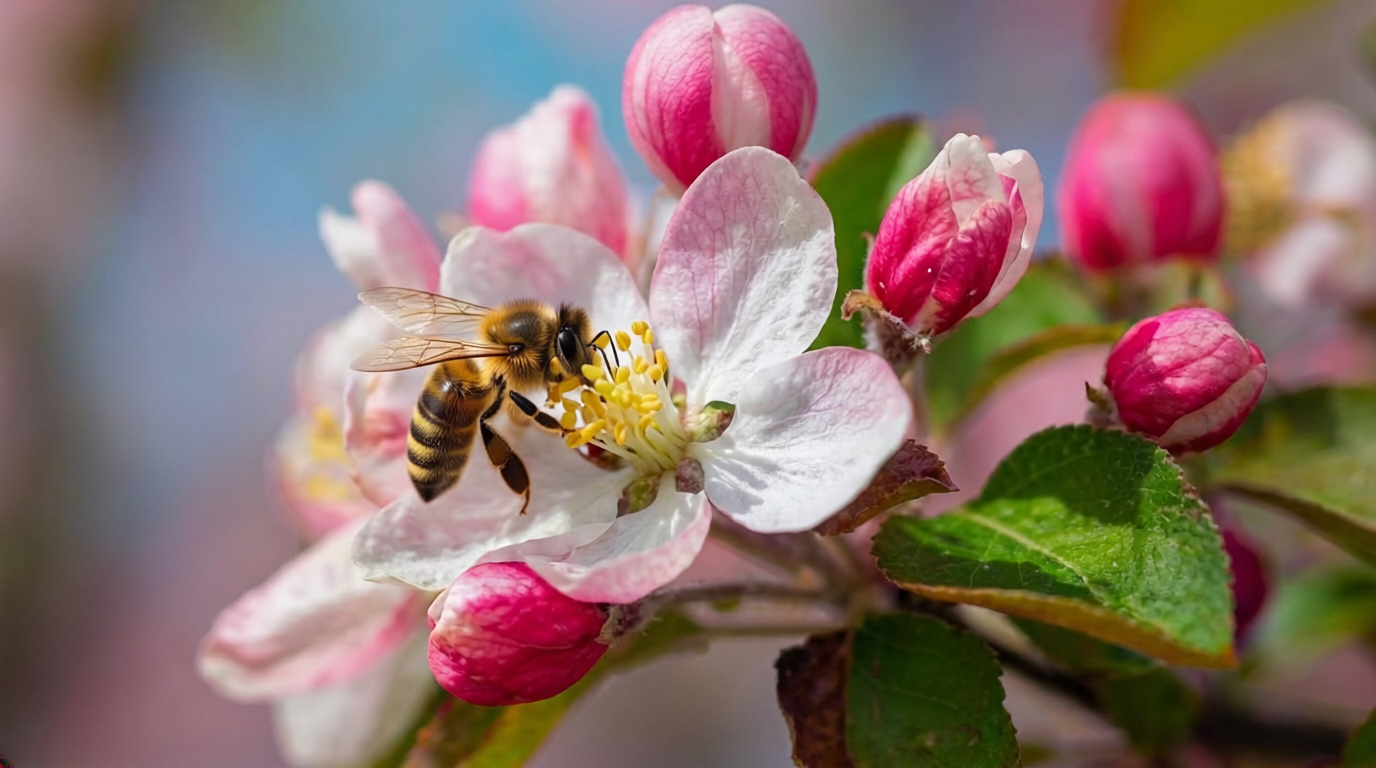
Honeybees and native pollinators are sensitive to weather. If temperatures stay below 55°F, or if heavy rain and wind move through, bee activity can drop sharply, reducing pollination.
Extreme Heat
Conversely, unseasonal spring heat above 80°F can speed up the bloom process dramatically, sometimes compressing the flower’s receptive window down to a single day.
Late Frosts
A sudden drop below freezing can ruin an open blossom before fruit ever has a chance to form. The blossom may still look clean and white for several days afterward, even though the fruit-forming parts have already been damaged.
When this happens, the tree may appear to have bloomed normally, but the crop was lost before fertilization could even take place.
4. How to Improve Pollination in a Home Orchard
When poor weather or difficult-to-set varieties threaten a crop, commercial growers treat it as a technical problem. They use specialized equipment to distribute supplemental pollen across entire orchard blocks.
A home orchard allows for a more targeted approach: watching which trees are blooming, identifying where pollen is needed, and stepping in when conditions are poor.
Here are a few practical ways to improve pollination in a home orchard.
Introduce a Reliable Pollinizer
Planting a compatible crabapple variety is one of the most effective long-term strategies.
Because crabapples produce an abundance of viable pollen over an extended flowering period, a single crabapple tree can provide coverage for multiple eating varieties. They also have a small footprint and take well to pruning, meaning they do not need to take up much space even in a limited backyard.
Move Pollen From One Tree to Another
If compatible apple varieties are blooming at the same time but bees are not active, you can move pollen by hand.
Use a cotton swab or small paintbrush to collect pollen from the center of an open flower on one compatible tree. Then brush that pollen onto fresh, open blossoms of the tree you want to pollinate.
This can help when the right flowers are open at the same time, but cold, wind, or rain is keeping pollinators from moving pollen between trees.
Use Supplemental Apple Pollen
If compatible pollen is missing, limited, or pollination activity is poor, supplemental apple pollen can be applied by hand during bloom.
Many home fruit growers are surprised to learn that you can actually buy pollen for fruit trees. While bees naturally move pollen from flower to flower, there is a specialized industry dedicated to harvesting, processing, and supplying pollen for fruit production. Commercial growers have relied on supplemental pollen for decades when weather, poor bloom overlap, or limited pollinator activity threatens fruit set. Today, PollenPro makes that same solution available to home fruit growers.
Home fruit growers have a unique advantage. Instead of broadcasting pollen over an entire orchard, they can place viable pollen directly onto each receptive blossom. Because every application is intentional, a small amount of pollen can pollinate a large number of blossoms.
Applying supplemental pollen is simple. Dip a small brush lightly into the pollen, then touch the center of newly opened flowers while they are receptive. Each PollenPro Pollination Kit includes professionally harvested apple pollen, an application brush, and clear, step-by-step instructions, making it easy to get started with supplemental pollination.
Learn more about our Apple Pollination Kits.
Take the Guesswork Out of Spring
A blooming apple tree is full of potential, but blossoms alone do not guarantee fruit.
To get a dependable crop, home growers need compatible varieties, overlapping bloom times, active pollinators, and workable spring weather during a very short window.
By knowing your varieties and taking a more active role in pollination when needed, you can give your apple tree a much better chance of setting fruit.
If you’d like to learn more about tree fruit pollination, Washington State University has some excellent information on its Pollination Resource Page.